Designing Effective Social Media Posts for Your Medical Clinic: A Complete Guide to Using Ready-Made Templates
In today’s digital-first world, a strong social media presence is no longer optional for medical clinics—it’s essential. Patients turn to platforms like Facebook, Instagram, and LinkedIn to research healthcare providers, learn about services, and find trustworthy health information. But creating professional, eye-catching social media posts consistently can be a challenge, especially when you’re already balancing patient care, administrative tasks, and compliance requirements. That’s where a social media post medical clinic template comes in. This guide will walk you through everything you need to know about using a fully customizable, editable design template specifically built for healthcare providers, with a focus on a 500x500 pixel RGB color design at 300 DPI resolution, presented in a well-layered and organized AI file.
What Is a Social Media Post Medical Clinic Template?
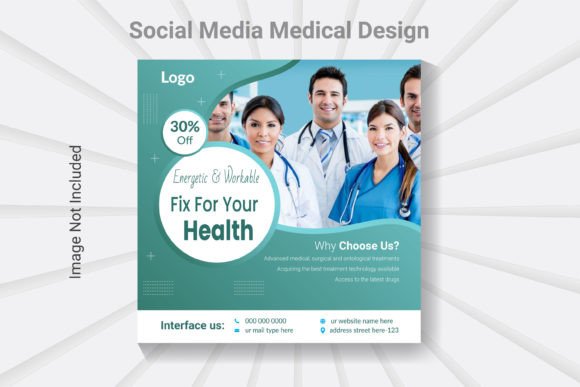
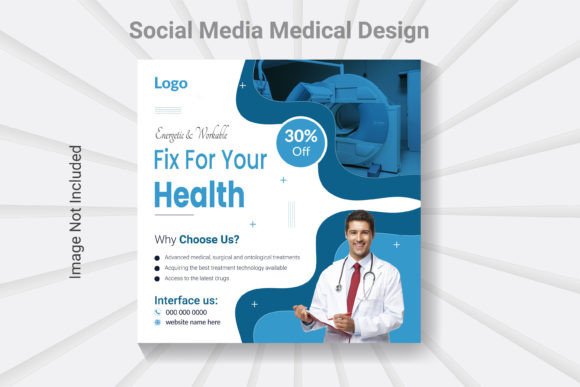
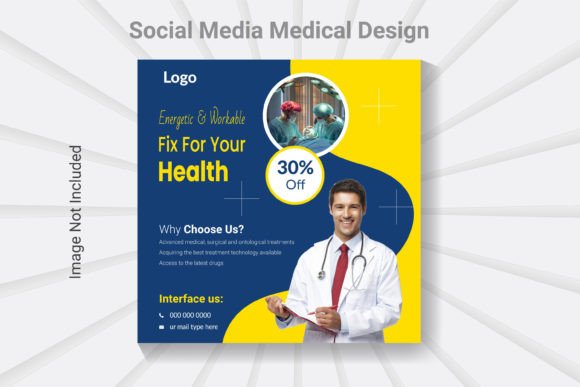
A social media post medical clinic template is a pre-designed graphic layout tailored for healthcare practices. It usually includes placeholders for your clinic’s name, services, contact information, and a health-related message or visual. The template discussed here is provided as an Adobe Illustrator file (AI) and an EPS file, both compatible with CS6 or higher, plus a JPG preview. The design is built at 500x500 pixels—a square format that works perfectly for Instagram posts, Facebook feed posts, LinkedIn updates, and many other platforms. The color mode is RGB (ideal for screens), and the resolution is 300 DPI (ensuring crisp, professional output even if scaled).
The key selling point is that everything is editable: text, fonts, colors, and layers are fully customizable. The file uses a free font, so you don’t need to purchase any additional typography. Importantly, images are not included—meaning you supply your own photos or illustrations, making the design compliant with your clinic’s branding and privacy policies.
Why These Specifications Matter for Your Clinic’s Social Media
Let’s break down the technical details in plain language, so you understand why each one is important for your practice.
500x500 Pixels – The Ideal Square Format
Social media platforms love square images. Instagram feed posts, Facebook shared images, and LinkedIn updates all display square crops beautifully. A 500x500 pixel canvas gives you enough resolution to look sharp on mobile devices and desktops without being so large that it slows down loading times. For a medical clinic, this size is perfect for health tips, appointment reminders, staff spotlights, or patient education cards.
RGB Color Mode – Optimized for Screens
RGB (Red, Green, Blue) is the color space used by all digital screens. Designing in RGB ensures that the vibrant blues, calming greens, and warm neutrals you choose for your clinic’s brand appear exactly as intended on a patient’s phone or computer. Avoid CMYK (used for print) when designing for social media—RGB gives you a wider, more accurate range of colors on digital displays.
300 DPI Resolution – Crisp and Professional
DPI (dots per inch) measures print resolution, but when applied to digital design, a 300 DPI file means the image contains enough detail to look clean and professional. Even if a platform compresses your image, starting with a high-resolution 300 DPI file ensures your text remains readable, your logo stays sharp, and your clinic looks credible. Low-resolution images can appear blurry or pixelated, which damages trust—something no healthcare provider can afford.
Well-Layered and Organized AI File – Easy Editing
A well-layered Illustrator file means each element (background, text, buttons, logos, decorative shapes) sits on its own layer. This makes editing incredibly intuitive. Want to change the background color? Click the background layer and adjust. Need to update a phone number? Find the text layer and type. This structure saves hours of frustration and is especially valuable for clinic staff who may not be professional designers.
Free Font Used – No Extra Cost or Licensing Hassle
The template uses a free font, so you don’t need to purchase a license or worry about copyright issues. Free fonts like Open Sans, Montserrat, or Roboto are clean, professional, and highly readable—ideal for healthcare communication. You can still change the font to any other free or licensed font, but you won’t be forced to buy anything just to use the template.
Image Not Included – Control Over Visuals
You might wonder, “Why would I want a template that doesn’t include images?” The answer is flexibility and compliance. Medical clinics need to use HIPAA-compliant images (no patient faces without consent) and brand-consistent photography. By providing your own images—whether stock photos, staff photos, or illustrations—you maintain full control over your clinic’s visual identity and legal obligations.
Files Included and What They’re For
When you purchase or download this type of template, you typically receive three files:
- 1 AI File (CS6 or higher): The fully editable Adobe Illustrator file. Use this if you have Illustrator installed. All layers, text, and effects are intact.
- 1 EPS File (CS6 or higher): A vector-based fallback that can be opened in many other design programs (CorelDRAW, Affinity Designer, older versions of Illustrator). It maintains editability.
- 1 JPG File: A high-quality preview image. Use this for quick reference, sharing with colleagues, or posting directly if you don’t need edits.
Having both AI and EPS gives you maximum compatibility across different software and versions.
How This Template Fits Into Modern Healthcare Marketing
Social media is now a cornerstone of patient engagement. A well-designed post can:
- Announce new services (e.g., telemedicine, same-day appointments)
- Share seasonal health tips (flu season, allergy awareness, summer safety)
- Introduce providers and staff (building trust and familiarity)
- Promote patient testimonials (with permission)
- Educate patients about conditions (diabetes, hypertension, etc.)
- Highlight community involvement (health fairs, charity events)
Because the template is easy customizable, your front desk manager, marketing coordinator, or even a physician with basic design skills can create a new post in 10–15 minutes. This agility is crucial in healthcare, where timely communication can directly impact patient outcomes.
Example: Creating a “Flu Vaccine Available” Post
Imagine your clinic wants to announce that flu shots are now available. With the template, you:
- Open the AI file in Adobe Illustrator CS6 or later.
- Select the text layer and change the headline to “Flu Vaccine Now Available.”
- Update the body text with hours, location, and “no appointment needed.”
- Change the accent color to match your clinic’s brand (e.g., a calming blue).
- Insert your own photo of a clinician administering a vaccine (or a relevant stock image).
- Export as a JPG or PNG, then post to your social channels.
This entire process takes less than 15 minutes, and the result looks polished and professional—no graphic design degree required.
Common Misunderstandings Clarified
Let’s clear up a few things that often confuse buyers or users of social media templates.
- “I need to be a designer to use an AI file.” Not at all. If you can use basic software like Microsoft Word, you can learn Illustrator basics in an hour. Many clinics partner with a designer only for initial setup, then handle day-to-day posts themselves.
- “300 DPI is only for print.” While DPI is a print measure, a 300 DPI digital file at 500x500 pixels contains more data than a 72 DPI file, resulting in better clarity. It’s especially important if you ever repurpose the post for printed flyers or banners.
- “No image included means the template isn’t complete.” On the contrary, it means the template is adaptable. You’re not stuck with a generic stock photo that every other clinic uses. You control the visuals.
- “Free fonts look unprofessional.” Many free fonts are used widely in professional design because they are clean and legible. The key is choosing the right font for your brand—something the template’s well-layered structure makes easy to change.
Building a Broader Understanding: Why This Approach Works
Using a well-layered, editable template aligns with modern content marketing principles. Instead of starting from scratch each time, you maintain a consistent brand identity across all posts. Consistency builds recognition and trust—two critical factors when patients are choosing a healthcare provider.
From a workflow perspective, a template empowers your team to publish regularly without burning out a designer or outsourcing every post. You can maintain an active social media calendar, respond to trends, and address patient concerns in near real-time. In an era where patients often research a clinic’s online presence before booking, this capability directly impacts your practice’s growth.
Moreover, the 500x500 pixel format is inherently mobile-friendly. Over 60% of social media browsing happens on smartphones, and square images take up optimal screen space without awkward cropping. For a medical clinic, where your audience may include older adults or busy parents, making your content easy to view and understand on any device is a courtesy that builds goodwill.
Practical Tips for Getting the Most Out of Your Template
- Start with a brand kit: Before editing, gather your clinic’s logo, brand colors (hex codes), and preferred fonts. Use the template’s layers to apply them consistently.
- Keep text minimal: Social media users scroll quickly. Use short headlines, bullet points if needed, and always include a clear call-to-action (e.g., “Call us today,” “Book online,” “Learn more”).
- Use high-quality images: Since the template doesn’t include images, invest in a small library of licensed stock photos or take original photos (with permission). Blurry or low-res images will undercut the professional look of the template.
- Save a master version: Once you’ve customized the template with your brand elements, save a copy as a master file. Then each time you create a new post, open the master, duplicate the artboard, and edit only the content layers.
- Export correctly: For social media, export as PNG (for transparency) or high-quality JPG. Use “Save for Web” in Illustrator to control file size and quality.
Conclusion
A social media post medical clinic template with a 500x500 pixel RGB design at 300 DPI, delivered as well-layered AI and EPS files, is more than just a graphic asset—it’s a strategic tool for modern healthcare communication. It simplifies the design process, maintains brand consistency, and allows your clinic to engage patients with timely, professional content. Whether you’re announcing a new service, sharing a health tip, or simply reminding patients about preventive care, this template gives you the power to create polished posts in minutes. And because it uses free fonts, requires no included images, and works with software as old as CS6, it’s accessible to almost anyone. In the ever-evolving landscape of digital healthcare marketing, having this kind of ready-to-use, fully editable asset is a practical advantage that directly supports your mission of putting patients first.