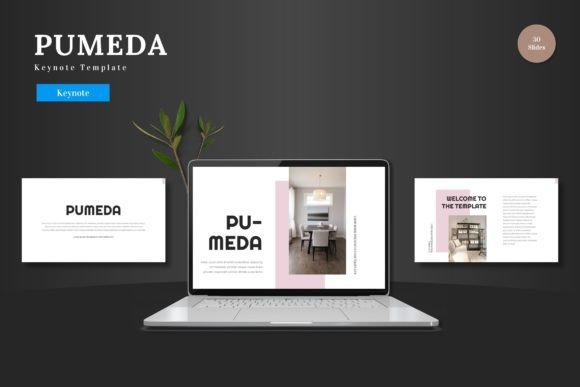
Pumeda - Keynote Template: A Practical Workflow Tool for Polished Presentations
Putting together a strong presentation is rarely just about filling slides with text. Whether you are preparing a pitch deck for investors, a product showcase for an e-commerce audience, or an internal training module for your team, the quality of your slides directly affects how your message lands. The Pumeda - Keynote Template is designed to streamline that process. It offers a clean, scalable, and colorful set of slides that can be adapted to almost any business or personal need, while keeping your production workflow simple and efficient.
This article walks through where this template fits in a broader presentation workflow, how to integrate it before, during, and after your project, and what practical steps you can take to get the most out of it. If you are a professional, entrepreneur, marketer, educator, or content creator looking for a reliable slide foundation, this guide will help you use the template as a genuine time-saver and quality booster.
Understanding the Role of a Keynote Template in Your Workflow
Most people start a presentation by opening Keynote and staring at a blank slide deck. That moment often leads to wasted energy on layout decisions, color choices, and formatting inconsistencies. A template like Pumeda removes that friction. It gives you a pre-built structure so you can focus on the content itself — your data, your story, your call to action.
The Pumeda - Keynote Template is more than a set of static slides. It includes 150 total slides across 5 premade color schemes, with 30 slides per template. You also get section break slides, handcrafted infographics, and pixel-perfect illustrations. This means you can start a project at a high level, selecting your preferred color variation, and then drill down into the content without worrying about design consistency.
Before You Begin: Preparation and Planning
Before opening Keynote, take a few minutes to outline your presentation structure. Know your audience and your key message. The template works best when you have a clear narrative arc — introduction, problem, solution, evidence, and conclusion. Determine how many sections you need, what data points you want to highlight, and where images or portfolio slides fit.
Because Pumeda includes 5 color variations, you can plan your brand alignment at this stage. Do you want a neutral blue scheme for a corporate boardroom? A warmer palette for a creative pitch? Choose your color variation early and stick with it through the entire deck. This saves you from having to adjust colors slide by slide later.
Also gather your assets beforehand: logos, product photos, screenshots, infographics, and any text you plan to use. The template uses picture placeholders with drag-and-drop functionality. Having your images ready means you can insert them as you build, rather than pausing to search for files.
During the Build: Customizing and Editing
Once your planning is complete, the real workflow begins. Open the Pumeda - Keynote Template in Keynote (the .key or .pptx files work across platforms). The main file includes 5 PPTX files (one for each color scheme) plus a ReadMe with font and photo information. If you prefer working in Keynote itself, you can open the PPTX and then save as .key.
All elements are built on Master Slides. This is a huge advantage because it means you can edit the entire deck’s look from the master view. Change a header font, adjust a bullet style, or tweak a background color — and the change propagates to every slide using that master. This aligns perfectly with a workflow that values consistency and speed.
Editing Without Extra Software
One of the most practical features of the Pumeda template is that everything is editable directly inside Keynote Slides. You do not need Adobe Illustrator, Photoshop, or any other tool. Shapes, icons, text boxes, and graphics are all native Keynote objects. If you want to resize a pie chart, change an icon’s color, or move an illustration, you just click and adjust.
This is especially useful for teams or freelancers who need to produce presentations quickly. There is no back-and-forth with a design tool, no exporting of static images. You stay inside Keynote from start to finish. For product promotion or e-commerce decks, this means you can swap placeholder product images with your own, update pricing, and modify call-to-action buttons in moments.
Using the Pre-Built Slides Efficiently
The template comes with 150 slides organized in sections. You will likely not use all of them, but having the library means you can pick and choose what fits your narrative. Section break slides help you transition between major topics — use them to signal a shift in argument or to introduce a new case study.
Handcrafted infographics are another strong feature. Instead of building charts from scratch, you have designed slide elements that you can populate with your own numbers. For a business pitch deck, this lets you present revenue growth, market share, or user acquisition data in a visually engaging way without using a separate charting tool.
The gallery and portfolio slides are perfect for showcasing work, products, or team member bios. If you are an educator, you can use them to highlight student projects. If you are a freelancer, they let you display past client work in a consistent layout. All you need to do is drag your images into the placeholders — the template automatically scales and positions them.
Color Customization and Consistency
With 5 premade color variations, you can match your brand or a specific theme without starting from scratch. But you can also modify colors within a scheme. Because all elements are built from Keynote shapes, changing the color of an icon or a background is a single click. This is particularly useful when you need to align the deck with a client’s brand guidelines or a specific campaign color palette.
For long-term use, you can save your own color variations as custom themes within Keynote. This way, the next time you start a project, your default palette is ready. The template becomes a reusable asset in your toolkit, not just a one-off deck.
After the Presentation: Finishing and Sharing
Once your content is in place and the slides are polished, the workflow moves to the final stage. The Pumeda - Keynote Template includes animated slides, which can add a professional touch to your transitions. You can adjust the animation timing in Keynote’s inspector. Keep animations subtle — the template’s clean style works best with simple fades or moves that do not distract from your message.
Exporting is straightforward. You can share as a live Keynote file, export to PDF for handouts, or save as a movie if you need a self-running presentation. Because the template uses standard Keynote features, there are no compatibility surprises. The slides remain editable even after sharing with colleagues who use different operating systems, as long as they have Keynote or the PowerPoint version.
If you are presenting to a remote audience, consider exporting as a PDF or using Keynote’s built-in recording tools. The clean, scalable design ensures that your slides look good on screens of any size, from a laptop to a large conference display.
Practical Implementation Tips for Different Users
Different roles will integrate the Pumeda template in slightly different ways. Below are real-world scenarios that show how it can fit into daily workflows.
For Entrepreneurs and Startups
You need a pitch deck that communicates your vision without looking amateurish. Use the template’s infographic slides to showcase traction and market opportunity. The section break slides can separate your problem, solution, and financials. Because the template is multipurpose, you can also reuse the same structure for investor updates, sales decks, or even internal all-hands meetings. Stick to one color variation across all your materials to build visual brand recognition.
For Marketers and Content Creators
Whether you are producing a client proposal or a webinar slide deck, consistency is key. The Pumeda template saves you from reinventing the layout each time. Use the portfolio and gallery slides to display campaign results, case studies, or product shots. Because all elements are editable, you can quickly swap out images from one month to the next. The drag-and-drop placeholders mean you do not have to align objects manually.
For Educators and Trainers
Educational presentations often require a mix of text, images, and data. The template’s clean, scalable design ensures that students can read slides even in a large lecture hall. Use the infographic slides to explain complex processes step by step. The handcrafted illustrations can be adapted to visualize abstract concepts. Because you can edit everything in Keynote, you can update your slide deck each semester without starting from scratch.
For Freelancers and Small Business Owners
Time is money. If you produce multiple presentations for different clients, the Pumeda template acts as a consistent starting point. Choose a neutral color scheme as a base, then adjust colors per client. The 150-slide library means you have plenty of layout options without needing to create new slide masters. Over time, you can build a collection of customized decks, each saved as a separate theme file for quick access.
Long-Term Use and Maintenance
A good template is an investment. With proper care, the Pumeda - Keynote Template can serve you for years. Keep the original PPTX files stored safely in a cloud folder or a dedicated template library on your computer. When you need a new deck, copy the master file, rename it, and start editing. This preserves your original template intact and avoids accidental overwrites.
Periodically check for updates to Keynote or PowerPoint that might affect how the template behaves. Since the template is built on standard shapes and master slides, it is likely to remain compatible with future versions. The ReadMe file included with the product lists the fonts and photo sources — keep those details handy in case you need to reinstall fonts or track down image credits.
If you work with a team, consider sharing the template as a company-standard starting point. Set guidelines for which color scheme to use for different types of presentations. This fosters a unified brand look across departments without mandating rigid design rules. The flexibility of the template means each presenter can still add their own voice while staying within a consistent visual framework.
Quality Control and Final Checks
Before you present, run through a simple quality checklist. Verify that all placeholder images have been replaced with your own. Check that fonts render correctly on the target device (the template uses standard system-friendly fonts, but if you installed custom ones, confirm they are embedded). Review the animations on a few slides to ensure timing feels natural. Because the template is built with pixel-perfect illustrations and handcrafted infographics, the visual quality should already be high — your main job is to make sure the content is accurate and aligned with your message.
The Pumeda - Keynote Template is more than a design surface. It is a practical tool that fits into the everyday workflow of anyone who needs to create presentations that look professional without hours of design work. By understanding its role before, during, and after your project, you can turn slide creation into a repeatable, efficient process. Focus on your message, and let the template handle the layout.
Whether you are building a business pitch, an e-commerce product overview, or a personal portfolio, this template provides a scalable foundation that adapts to your needs. With 150 slides, 5 color variations, and full editability inside Keynote, it supports both short-term projects and long-term content strategies. The result is a presentation that feels polished and purposeful — exactly what your audience deserves.