The Blueprint for Branding: Mastering the Social Media Cover Design Layout and Features Design
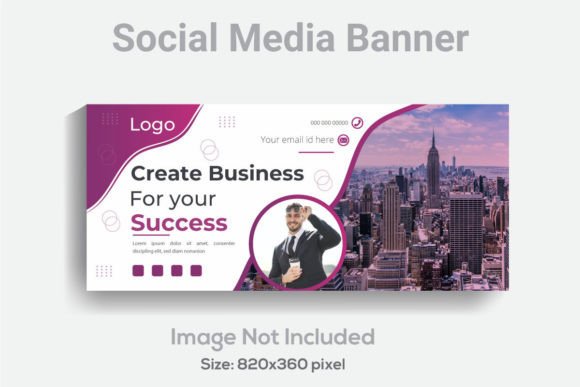
First impressions in the digital space happen in a fraction of a second. A user scrolls through a feed, pauses on a profile, and immediately registers the visual identity of a brand. That split-second judgment often hinges on one element: the cover image. A Social Media Cover Design Layout is not merely a decorative header; it is a strategic asset. It sets the tone, communicates professionalism, and reinforces recognition. When that cover is built with precision—at 820x360 pixels, in RGB color mode, at a crisp 300 DPI—it becomes a versatile tool that bridges creativity and technical reliability.
This article explores what makes a cover design truly effective, focusing on the layout and features that matter for designers, marketers, and business owners. We will examine the technical specifications, the importance of organized file structures, and the practical advantages of editable assets. Whether you are refreshing a brand, launching a new campaign, or building templates for clients, understanding these components will elevate your work.
Why the 820x360 Pixel Canvas Matters for Social Media
The dimensions 820x360 pixels are not arbitrary. They represent a standard used across several major platforms for cover images, particularly for LinkedIn and Facebook profile banners. This specific aspect ratio—roughly 2.27:1—allows for a wide, panoramic view that fits well on desktop and mobile screens without excessive cropping. Designing within this frame requires careful attention to the Social Media Cover Design Layout, ensuring that critical elements like logos, taglines, and calls-to-action remain visible regardless of the device.
Working at 300 DPI (dots per inch) might seem overkill for digital screens, which typically display at 72 DPI or 96 DPI. However, there is a compelling reason to design at this higher resolution. It provides a sharp, detailed file that can be repurposed for high-quality prints—think business cards, brochures, or event banners. A design created at 300 DPI retains its clarity when scaled down or printed, giving you flexibility beyond the digital realm. The RGB color mode, meanwhile, ensures that the vibrant hues you see on your monitor translate accurately to screens, where light-based color models dominate.
The Role of Color Accuracy and Resolution in Brand Consistency
Brand colors are non-negotiable. A slight shift in hue or saturation can undermine trust and recognition. With an RGB color profile, you capture the full spectrum of screen-visible colors, from deep blues to bright oranges. When you embed this into a well-layered Social Media Cover Design Layout, you enable easy adjustments without corrupting the original palette. The 300 DPI resolution further protects your work: it prevents pixelation when you zoom in to fine-tune details, and it gives you a print-ready fallback if a client requests both digital and physical assets.
Well-Layered and Organized: The Backbone of Professional Design
A cover image might look beautiful when exported as a flat JPG, but the real value lies in the editable source file. A well-layered AI file transforms a static design into a dynamic toolkit. Layers should be logically named and grouped: separate folders for backgrounds, typography, graphics, and texture. This structure allows you to swap out a logo, change a background gradient, or shift text alignment without dismantling the entire composition.
When you open a Social Media Cover Design Layout that is fully organized, you save hours of guesswork. Instead of hunting for a misplaced shadow or trying to replicate a color value, you click directly into the relevant layer. This is essential for teams where multiple designers might work on the same asset, or when a client wants a quick revision. The hierarchy of layers—from base background to topmost foreground elements—mirrors the visual depth of the design, making it intuitive to navigate.
How Layered Files Streamline Collaboration and Revisions
Imagine a scenario where a marketing team needs to produce ten versions of a cover for different regional campaigns. With a disorganized file, each version requires starting from scratch or risking accidental edits. With an organized AI file containing a Social Media Cover Design Layout, you simply duplicate the group, adjust the text layer, and swap the regional graphic. The process becomes repeatable and error-proof. This efficiency is why agencies and in-house design teams prioritize files that are "well-layered" and "organized." It is not a luxury; it is a productivity standard.
Editable AI Text, Fonts, and Colors: Freedom Within Structure
One of the most frustrating experiences for a designer is receiving a template where text has been outlined or rasterized. You cannot edit a single letter without redrawing the entire word. That is why fully editable AI text is a critical feature. When every headline, subtitle, and body copy remains a live text object, you can type new content, adjust kerning, or change the font family in seconds. The same principle applies to colors. A global swatch palette, with clearly labeled brand colors, allows you to update the entire Social Media Cover Design Layout with a single click.
Free fonts are another major advantage. They eliminate licensing headaches and legal concerns. When a template specifies that all fonts used are free for commercial use—whether that be open-source Google Fonts or other permissively licensed typefaces—you are free to distribute the file to clients or use it in your own products without additional fees. This transparency builds trust and removes barriers from adoption.
Why Minimum Adobe Illustrator CS6 Compatibility Is a Smart Requirement
Not everyone upgrades software annually. Many professionals—especially freelancers, small businesses, and educational institutions—run older versions of Adobe Illustrator. Specifying a minimum of CS6 ensures that the Social Media Cover Design Layout is accessible to a wide audience. CS6 introduced many of the core features still used today, like the modern interface and improved performance. By designing for backward compatibility, you guarantee that the file opens without errors on a range of systems, from Windows 10 to macOS Catalina, without requiring a subscription or upgrade.
Included File Formats: AI, EPS, and JPG—A Triple Safety Net
Receiving a single file format is risky. What if your software cannot open it? What if you need a quick preview before committing to edits? That is why a comprehensive package contains three essential formats:
- AI File: The primary editable source. All layers, effects, and typography remain intact. This is the file you use for any modification.
- EPS File: A universal vector format that opens in most graphic design applications, including older versions of Illustrator, CorelDRAW, and even some free alternatives like Inkscape. It preserves vector quality and most of the structural organization.
- JPG File: A high-resolution flattened preview. Use this for immediate uploads, proofs, or when you need to show a client the final look without revealing the editable structure.
These three formats cover nearly every use case. A Social Media Cover Design Layout delivered in this trio gives you flexibility, security, and convenience. You never have to worry about compatibility or file corruption during transfer.
Practical Scenarios: Where This Design Layout Shines
The true test of any design asset is how it performs in real-world projects. Consider the following examples:
- Brand Refresh for a Small Business: A local coffee shop wants to update its Facebook and LinkedIn banners. The owner has no design experience but has an AI file of a Social Media Cover Design Layout. They open the file, edit the text to include their new seasonal offerings, change the background color to match their new logo, and export a JPG for immediate upload. The process takes 15 minutes instead of two hours of struggling with complex software.
- Client Presentation for an Agency: A design firm creates three concept covers for a client. Because the layout is well-layered and includes global swatches, the team can generate variations in minutes—one with a dark background, one with a light background, and one with a gradient. The client picks their preferred version, and the final adjustments are applied to the same organized file, ensuring consistency across all deliverables.
- Multi-Platform Campaign: A nonprofit organization runs a fundraising campaign across Facebook, Twitter, and YouTube. Each platform requires slightly different cover dimensions or focal points. Using the original AI file at 820x360 pixels, the designer quickly exports cropped or resized versions without losing quality, thanks to the 300 DPI source. The campaign launches on time with uniform branding.
Observations on Modern Workflows and Design Trends
Today's design landscape emphasizes speed, collaboration, and adaptability. Flat design and minimalism remain popular, but there is a growing appetite for textured backgrounds, subtle gradients, and custom typography. A Social Media Cover Design Layout that is built with layers allows you to experiment with these trends without committing permanently. You can toggle visibility, apply new effects, or introduce patterns while keeping the core layout intact.
Another trend is the integration of video and animation in cover images. While a static JPG works for most use cases, the underlying AI file can serve as the starting point for an animated version in Adobe After Effects or Photoshop. The organized layers make it easy to isolate moving elements, such as a logo or headline, and export them for motion graphics. This forward-thinking design approach saves time when a client decides they want to "spice up" their profile with motion.
Recommendations for Choosing or Using a Cover Design Template
When you evaluate a Social Media Cover Design Layout, look beyond the initial aesthetic. Check the layer panel to confirm it is logically structured. Verify that the text is editable and that fonts are indeed free or included in the package. Test the file in your version of Illustrator—CS6 or later—to ensure it opens cleanly. And always use the JPG preview as a reference to confirm that your edits match the intended design.
If you are a designer building these templates for others, prioritize clarity over complexity. Name layers with plain English terms ("Logo Area," "Tagline Text," "Background Pattern") rather than cryptic abbreviations. Include a simple instruction sheet or readme file within the package. And always, always design at the native 820x360 pixel canvas with RGB color and 300 DPI. This combination guarantees that your work is professional, versatile, and ready for whatever the client or platform demands.
A well-crafted cover design does more than fill a rectangular space. It communicates identity, supports marketing goals, and adapts to change. By understanding the layout, features, and technical requirements behind it, you gain control over your visual presence. Whether you are a one-person brand or part of a global team, the right Social Media Cover Design Layout is a foundation you can rely on.