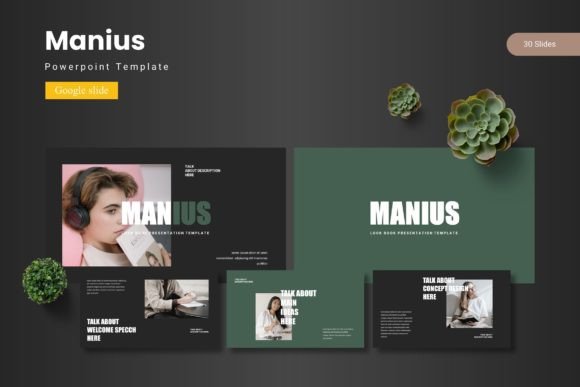
Manius Google Slide Template: Built for Real Presentations, Not Just Decks
Presentations have a way of revealing what you actually have to say. You can spend hours tweaking bullet points, only to realize the design is fighting your message. That is where a template like Manius - Google Slide Template steps in. It is not just another set of slides. It is a structured system that gives you room to think about content, not about where to place the text box. Whether you are pitching to a room of investors, walking a client through a quarterly review, or building a portfolio that tells a story, the template adapts to the moment rather than forcing you into a rigid format.
When the Presentation Needs to Feel Polished Without the Overwork
There are projects where the deadline is tight, but the audience expects something clean. A board meeting. A conference talk. A webinar where attendees are already skeptical of slide decks. In those situations, you need something that looks deliberate without looking flashy. Manius - Google Slide Template offers that balance. With 150 total slides spread across five premade colors, you can pick a palette that matches your brand or the mood of the event. The section break slides help you reset the room’s attention. After a dense data slide, a clean break slide gives people a moment to breathe before the next idea lands.
I have seen presenters use the break slides as transition points during long workshops. Instead of jumping straight from problem to solution, they insert a break slide with a single image or a short quote. It changes the pacing. The audience leans back, processes, and then leans in again. That kind of rhythm is hard to create from scratch. With Manius, it is baked into the structure.
Freelancers and Consultants Who Juggle Multiple Brand Identities
If you work with more than one client, you probably spend more time re-skinning decks than you do writing content. You have to match their colors, their logo placement, their typography preferences. The five color variations inside Manius - Google Slide Template become useful here. You are not locked into one identity. You can duplicate the template, apply a different color scheme, and have a presentation that feels native to that client’s brand within minutes.
One consultant I know keeps a folder with five versions of Manius, each assigned to a different industry. The tech client gets the cool blue scheme. The nonprofit gets the warm earth tones. The creative agency gets the bold accent palette. When a new project lands, she does not redesign. She just opens the right folder and starts dropping in content. That speed matters when you bill by the hour or when the client expects a draft by morning.
Educators and Trainers Who Need Visual Consistency Across Modules
Teaching is about repetition and clarity. If your slides change style every session, learners spend mental energy decoding the layout instead of absorbing the material. The master slide structure in Manius - Google Slide Template ensures consistency. Titles stay in the same place. Body text follows the same hierarchy. Images sit in the same aspect ratio. That predictability helps learners focus.
Consider a six-week course. Each week covers a different topic, but the slide structure remains familiar. The section break slides mark the start of a new module. The infographic slides summarize key models or frameworks. The gallery slides show case studies or student work. By the third week, your audience knows exactly where to look for the main point. That is not just design convenience. It is cognitive ease.
One trainer I observed used the picture placeholder slides to create a weekly “case in point” slide. She drag-dropped a photo related to the day’s topic, added a short caption, and moved on. No cropping, no resizing, no alignment tweaks. The template’s pixel-perfect illustrations and resizable graphics meant every image looked intentional.
Portfolio Presentations That Need to Show, Not Just Tell
A portfolio slide deck is different from a pitch deck. You are not selling a product. You are selling your taste, your range, your ability to solve visual problems. The gallery and portfolio slides within Manius - Google Slide Template are designed for exactly that. They give you room to show multiple pieces without clutter. Each image sits in its own space. The text is minimal. The focus stays on the work.
Photographers, designers, architects, and even writers use these slides differently. A photographer might fill the gallery slides with full-bleed images and let the template fade into the background. A designer might use the infographic slides to break down a complex project into before-and-after views. A writer might use the text-heavy slides to excerpt client testimonials alongside project descriptions. The template accommodates all those approaches without forcing a single visual language.
Internal Teams That Need to Standardize Without Stifling Creativity
Marketing departments, sales teams, and product groups often struggle with slide chaos. Everyone builds their own decks. The branding drifts. The fonts mismatch. The color schemes wander. Adopting a template like Manius - Google Slide Template gives the team a shared foundation without requiring everyone to become a designer.
The 30 slides per template section mean you can assign different sections to different team members and still get a coherent result. The product team builds the feature overview. The marketing team builds the go-to-market section. The sales team adds the pricing and case studies. When merged, the deck flows because the underlying structure is identical. The handcrafted infographic slides come in handy here. Non-designers can populate a pre-built infographic with their own data and end up with something that looks professionally produced.
One product manager told me that the biggest win was the picture placeholder system. Team members stopped sending emails asking “where does this image go?” They just dragged the image into the placeholder, and the template handled the rest. That might sound small, but over a quarter, it saves hours of back-and-forth.
Nonprofits and Community Organizations Working with Limited Resources
Budgets are tight. Design skills vary. Yet the need to communicate clearly is just as urgent. A grant proposal deck. A volunteer orientation slide set. A fundraising presentation. Manius - Google Slide Template works well here because the file itself is lightweight, the structure is transparent, and you can reuse it across multiple campaigns without starting over.
The five color schemes let you match different initiatives. One scheme for the annual gala. Another for the awareness campaign. The section break slides work nicely for separating “the problem” from “what we are doing about it.” The gallery slides can feature community photos or impact statistics. Since everything is resizable and editable, someone with basic slide skills can customize the template without needing advanced software knowledge.
What to Consider Before Committing to This Template
No template is perfect for every situation. Manius - Google Slide Template offers a lot of flexibility, but it helps to know what you are getting into.
The 150 slides can feel overwhelming if you are only building a five-slide deck. You might spend more time deleting slides than filling them. My advice is to start with one color variation and one section. Pull out the specific slide types you need—maybe a title slide, a few content slides, a break slide, and a closing slide. Ignore the rest. The depth of the template is there for when you need it, not as a requirement.
Because the template relies on Master Slides, changes you make to a master propagate across all slides that use it. That is powerful when you want consistency, but it can be confusing if you are editing a slide and do not realize you are editing the master. Spend five minutes understanding how Master Slides work before you start. It will save you from accidentally altering every slide when you only wanted to change one.
The included Readme First file is worth reading. It explains font requirements and photo information. Some of the fonts used in the previews may not be pre-installed on your system, so you might need to download them or substitute similar ones. The photo placeholders expect high-resolution images to look their best. Low-res images will appear stretched or pixelated, especially on the gallery slides.
The template comes in 5 PPTX files and 5 Google Slides files, each with 30 slides per color scheme. That works well if you are collaborating with people who use different platforms. But be aware that some animations or transitions in PowerPoint may not carry over perfectly to Google Slides, and vice versa. Test your deck on the platform you will present from before you go live.
How Different Users Get Different Value
A startup founder might use the portfolio slides to showcase product screenshots. A marketing director might use the infographic slides to visualize campaign results. A teacher might use the section break slides to structure a semester-long lecture series. A freelancer might use the color variations to manage multiple client projects from a single template file.
The value is not in the features themselves. It is in how those features remove friction from your specific workflow. When you are not fighting the slide layout, you can focus on the story. When you do not have to redesign every time you start a new project, you can take on more work. When your team speaks the same visual language, collaboration gets smoother.
Manius - Google Slide Template sits in that practical space between a blank canvas and a rigid template. It gives you enough structure to move fast and enough freedom to make it yours. Whether you are preparing for a high-stakes pitch or a routine weekly update, the slides are ready to hold your content without getting in the way.