Romono Keynote Template: A Practical Guide to Streamlined Presentation Workflows
For anyone who regularly builds presentations—whether for a client pitch, a classroom lecture, a product launch, or an internal team update—the gap between a good deck and a great one often comes down to consistency and efficiency. A template like Romono for Keynote is not just a collection of slides; it is a structural system designed to help you move from content gathering to polished delivery with less friction and more visual control. This article examines how Romono fits into real workflows, what you can expect when using it, and how to integrate it smoothly into your own routine.
Understanding Romono and Its Role in Your Process
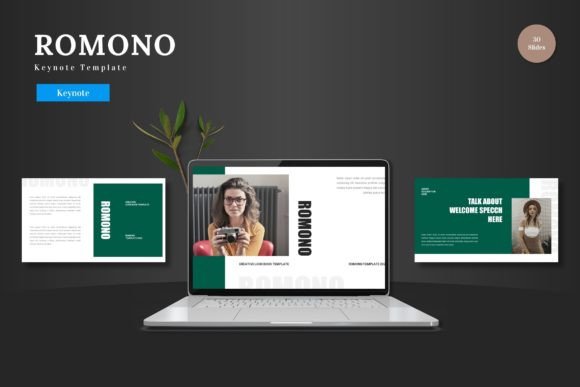
Romono is a Keynote template that provides 150 total slides across five premade color schemes. Each scheme includes 30 slides, with dedicated section breaks, handcrafted infographics, master-slide-based layouts, and pixel-perfect illustrations that remain resizable and editable. The template relies on picture placeholders that work via drag-and-drop, and it includes gallery and portfolio slide types. The folder you receive contains five Keynote files (one per color), a readme, font details, and photo information.
In a broader context, Romono functions as a foundation layer in your presentation workflow. You do not need to start from a blank canvas or manually align shapes and text boxes. Instead, you open a file, select the color scheme that matches your brand or event mood, and begin placing your content. This shifts your focus from design mechanics to message structure and storytelling—a more productive use of your time whether you are preparing a boardroom quarterly review or a creative portfolio showcase.
Before the Presentation: Planning and Preparation with Romono
The best results come when you treat the template as part of your pre-presentation system, not as an afterthought. Before you even open Keynote, take a few minutes to map out the narrative arc of your talk. Identify the key sections: introduction, problem statement, data insights, case studies, call to action, and closing. Romono’s 30-slide structure per color scheme gives you enough space to cover a typical 10–20 minute presentation with room for backup slides or Q&A support.
Once your outline is ready, decide which color scheme aligns with your context. The five variations let you choose between warmer or cooler palettes, high-contrast or muted tones. For a financial report, a conservative dark-on-light scheme might work best. For a creative pitch, something bolder could reinforce the energy of the ideas. Having this choice before you start building saves you from re-coloring later and ensures that the visual mood matches the content from the first slide.
Preparation also includes gathering your assets—logos, photographs, charts, icons. Because Romono’s picture placeholders accept images via simple drag-and-drop, you can batch-prepare your image folder in Finder or Photos, then quickly populate slides in sequence. This pre-work reduces interruption once you are in the flow of building the deck.
During the Build: Efficient Slide Creation and Customization
The real value of Romono emerges while you are constructing the presentation. Because the template uses master slides, any global change you make to a master (fonts, background colors, object positions) updates all slides that reference that master. This is especially useful when you need to maintain brand consistency across a long deck. If your organization updates its primary font mid-project, one master edit adjusts every slide automatically.
Each of the 30 slides per color scheme is already laid out with typography hierarchies, spacing rules, and illustration placements. You work within these frameworks, but you are not locked in. All graphics are fully resizable and editable. You can move an infographic element from a data slide to a section break, or scale down an illustration to serve as a smaller accent. The key is to treat the pre-built elements as starting blocks rather than final constraints.
One workflow technique is to build the content backbone first. Place all your headlines, body text, and image placeholders without worrying about final visual polish. Then, in a second pass, adjust sizes, swap colors using the provided palette, and fine-tune alignment. Because the template already enforces visual harmony, you can do this refinement quickly without getting bogged down in micro-adjustments.
For data-heavy presentations, the handcrafted infographic slides are especially useful. They come with editable charts, icon clusters, and diagram frameworks. You can replace placeholder percentages and labels with your own numbers. If your dataset requires a custom visualization, you can duplicate a relevant infographic slide, modify the elements, and keep the same stylistic language across all charts.
After Delivery: Reusability and Long-Term Value
A presentation workflow does not end when the slides are shown. Romono supports reuse in several ways. First, because you have five complete color schemes, you can repurpose the same content structure for different audiences. Take the 30-slide deck you built for an internal training, duplicate it, switch to a different color scheme, and adjust a few slides for an external conference. The underlying layout logic remains intact; only the tone changes.
Second, you can extract individual slides or elements for use in other projects. The pixel-perfect illustrations, for example, can be copied into other Keynote documents or even exported as PNGs for web use. The master-slide architecture also means that if you create a custom layout within Romono, that layout is available to any new deck you start from the same template file.
Quality control benefits from this consistency. When you reuse the same template across multiple presentations, you eliminate the risk of inconsistent typography, mismatched colors, or misaligned graphics. Over time, your audience recognizes the visual language as belonging to you or your brand, which builds familiarity and trust.
Integrating Romono with Your Toolkit
Romono is a native Keynote template, so compatibility is straightforward for Mac users. However, it also interacts well with other tools in your workflow. If you use presentation management platforms like Google Slides or PowerPoint, you can export individual slides as images or PDFs and re-import them. More practically, you can use Romono as the design source while keeping your script or speaker notes in a separate tool like Notion or Evernote. Build the deck in Keynote, but manage the narrative in a plain-text document that you revise independently. This separation of content and design prevents you from reshaping your message just because a slide layout feels restrictive.
For teams, Romono works well when one person owns the master template file and shares it via a cloud drive (iCloud, Dropbox, or Google Drive). Team members can open the same Keynote file, edit their assigned slide sections, and then merge changes manually or via Keynote’s collaboration features. The color schemes and master slides provide a shared design language, reducing the need for extensive style guides or back-and-forth feedback on visual details.
Real-World Workflow Example
Consider a small business owner who runs quarterly marketing review meetings. They have to present social media metrics, campaign performance, and upcoming initiatives to a team of five. Using Romono, they open the neutral color scheme, duplicate the “data” slide layout six times, and drag in screenshots from their analytics tool. For the section breaks, they use the provided divider slides to separate quarters. The entire deck takes under an hour to assemble, including time to replace placeholder text. Because the template handles the visual structure, the owner can concentrate on interpreting the data and preparing talking points, which directly improves the meeting’s effectiveness.
Another example: a freelance graphic designer building a portfolio presentation for a potential client. They choose the boldest color scheme, use the gallery and portfolio slides to showcase their best work, and customize the section break slides with their personal logo. The resizable illustrations allow them to add small icon accents that tie into their brand. The finished deck feels custom-built, even though it started from a template—because the customization options are genuinely flexible.
Practical Implementation Tips
- Review the readme and font information first. Romono may rely on specific fonts that you need to install or substitute. Resolve font availability before you start editing to avoid last-minute substitutions that shift layout.
- Use master slide view to lock in your brand font and primary color. Even within the premade schemes, you can adjust the master background or accent color to exactly match your brand if the provided palette is close but not perfect.
- Build your content in a text editor first. Paste text onto slides in bulk, then use the typography settings to adjust readability. This approach keeps you in a content-oriented mindset longer.
- Duplicate the entire template file before making major changes. Keep an untouched version as a backup so you can always return to the original layout if a customization goes too far.
- Leverage the picture placeholders for consistency. Crop and resize your images before dragging them in, so they fill the placeholder frame predictably. If you need precise positioning, adjust the image inside the placeholder rather than moving the placeholder itself.
- Plan for long-term maintenance. As your business evolves, you can update the base template file with new illustrations or colors, then propagate changes to all existing presentations that use it. Keep a single “master template” document that you never edit directly for a specific deck—rather, duplicate it for each project.
- Test your deck on the actual presentation equipment. Romono’s slides rely on layered elements that may render slightly differently on older keynotes or mirrored displays. Do a full-screen test run to ensure transitions and builds appear as intended.
By treating Romono not as a quick fix but as a consistent component of your presentation process, you save time on repetitive design tasks and gain the freedom to focus on message quality. The template’s structure supports preparation, efficient construction, and long-term reuse. Whether you are an educator building course modules, a marketer creating campaign decks, or a freelancer showcasing your work, Romono provides a practical foundation that adapts to your workflow rather than dictating it.